
Pigsty v3.6: The Ultimate PostgreSQL Distribution
Originally published on VONNG.

Pigsty v3.6 is officially released. After two months of careful refinement, this will be the last major version before v4.0, featuring extensive refactoring and improvements that lay a solid foundation for building the ultimate all-in-one PostgreSQL distribution.
This version deeply optimizes and refactors deployment tasks for PostgreSQL, MinIO, and Etcd, adds Percona PG TDE kernel support with out-of-the-box transparent encryption functionality. Additionally, the Supabase self-hosting experience has been comprehensively optimized, destructive database operations have been completely removed from idempotent playbooks, and a new fully automated pgsql-pitr playbook enables one-click point-in-time recovery.
The installation process has been further simplified: from four steps to three steps (download, configure, install), now defaulting to online installation mode which skips local software repository construction.
New Kernel Support: Percona PG TDE
Percona’s pg_tde extension has finally reached 1.0 GA after years of development. Many “enterprise-grade” PostgreSQL distributions tout “transparent encryption” as a core selling point — pg_tde may be the first mature enough open-source transparent encryption extension, providing truly enterprise-grade transparent encryption for open-source PostgreSQL.
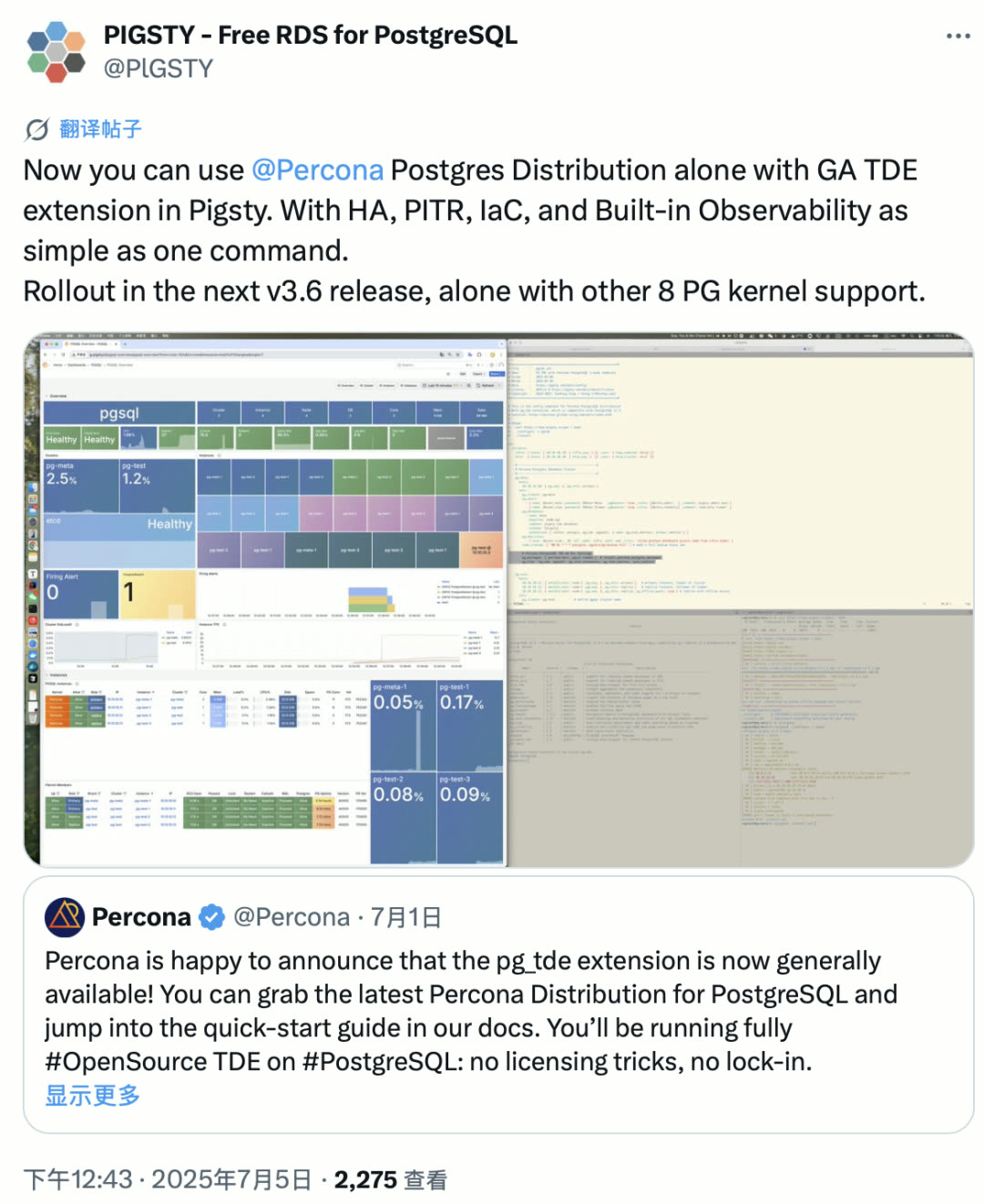
Currently, this extension requires running on a patched PostgreSQL kernel — Percona’s Postgres distribution. Pigsty added support immediately after the announcement — just two commands to enable and install, while enjoying Pigsty’s full RDS capabilities: monitoring, high availability, PITR, IaC, and more — identical to the vanilla PG kernel.
With this, the number of PostgreSQL kernels supported by Pigsty has reached 10.
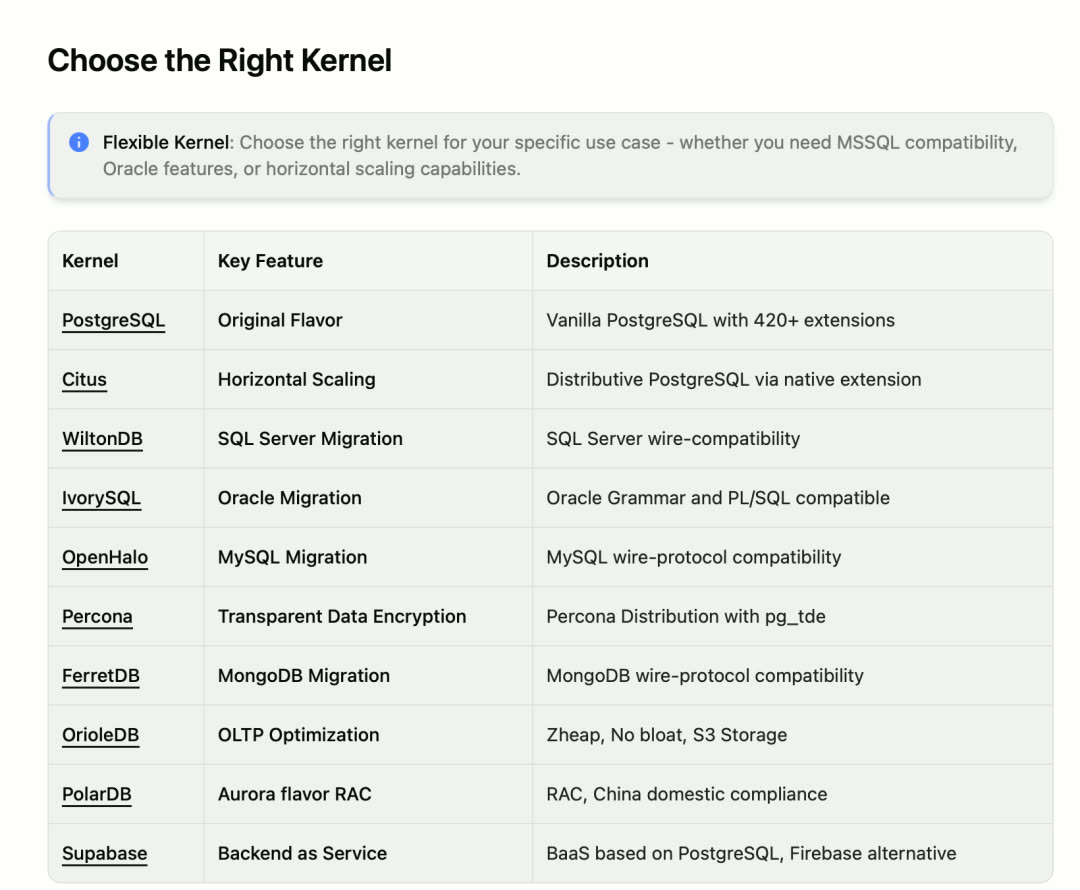
Pigsty has become a distribution of PostgreSQL distributions — a “meta-distribution.” Various PostgreSQL fork kernels can be transformed into “enterprise-grade database services” with high availability, monitoring, IaC, and PITR capabilities under Pigsty’s umbrella.
Extension Ecosystem Continues to Strengthen
Besides the Percona transparent encryption kernel, OrioleDB also released 1.5 beta12 — Supabase’s CEO revealed it’s nearing official GA. Pigsty has immediately compiled the OrioleDB-patched version of PG and its extensions.
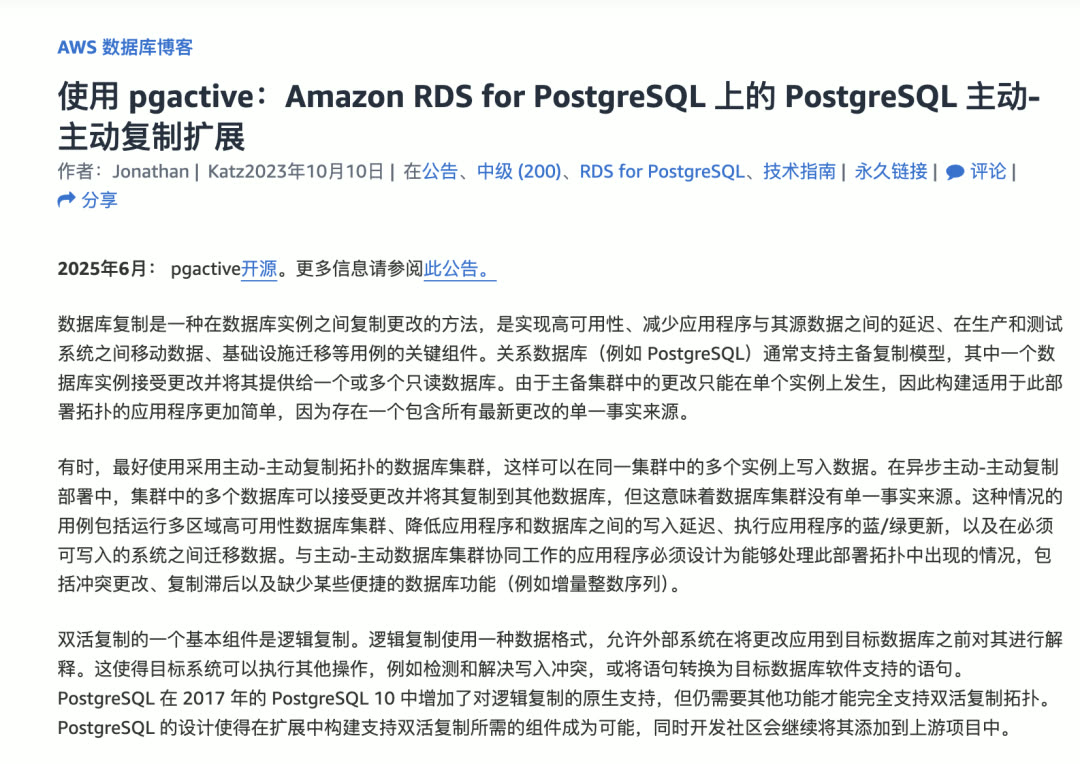
Another noteworthy extension is pgactive — an AWS-developed and open-sourced PG multi-active extension that claims to solve sub-second high availability failover. This extension depends on the missing pgfeutils and has compilation barriers — Pigsty provides out-of-the-box binary packages.
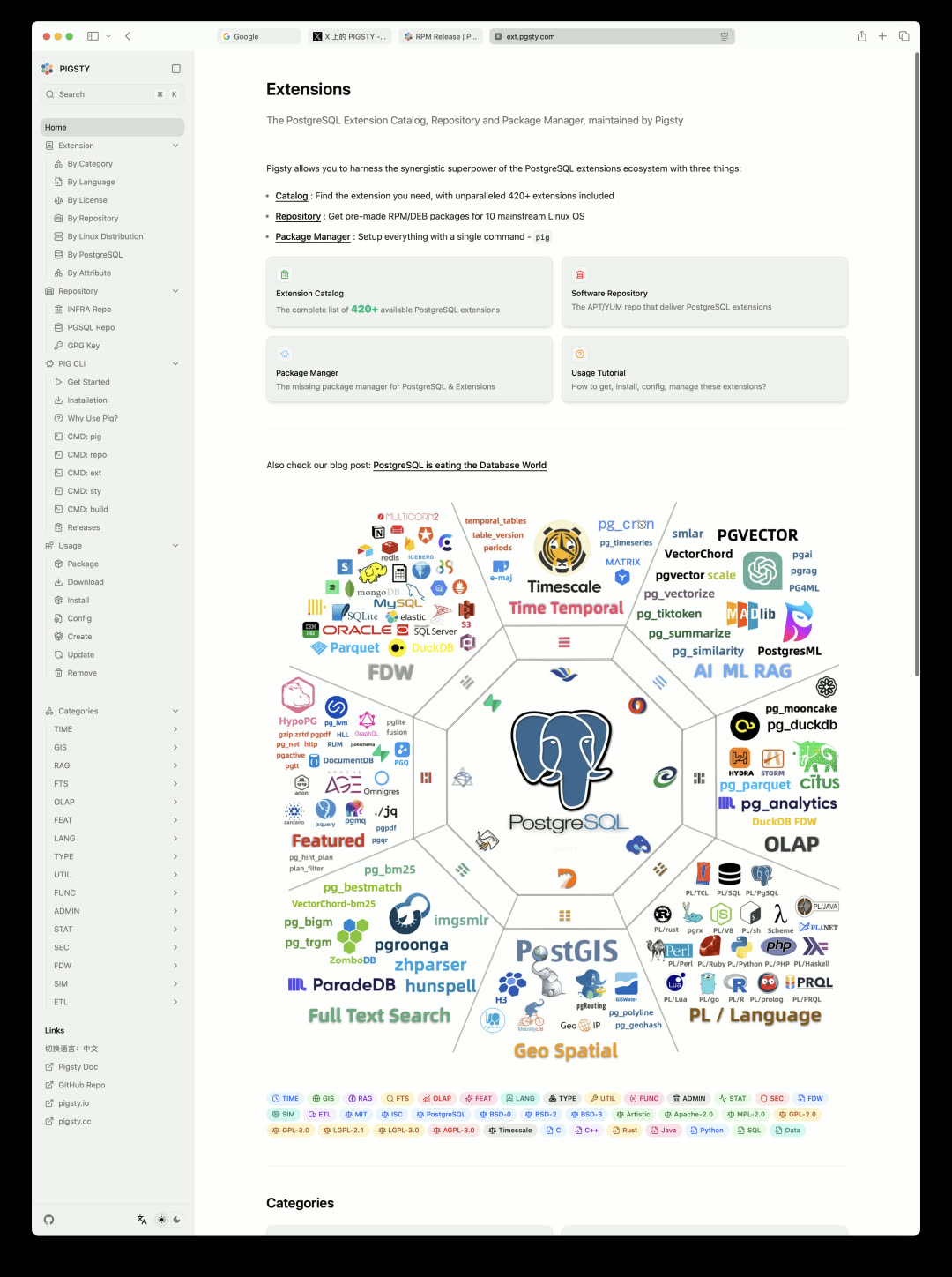
Available extensions have reached 423. PG18 beta2, OrioleDB, TimescaleDB, Citus, FerretDB & DocumentDB, DuckDB, Etcd, and more have completed routine version updates.
The extension catalog site has also been completely revamped using Next.js reconstruction, with significantly improved appearance. New address: https://pgext.cloud
Supabase Self-Hosting Experience Optimization
Pigsty v3.6 provides a smoother Supabase self-hosting experience and fixes several issues in Supabase’s official templates:
- logflare replication slot not advancing
- Massive error log printing
- Studio unable to view two Analytics logs
Production-grade Supabase self-hosting requires just a few commands:
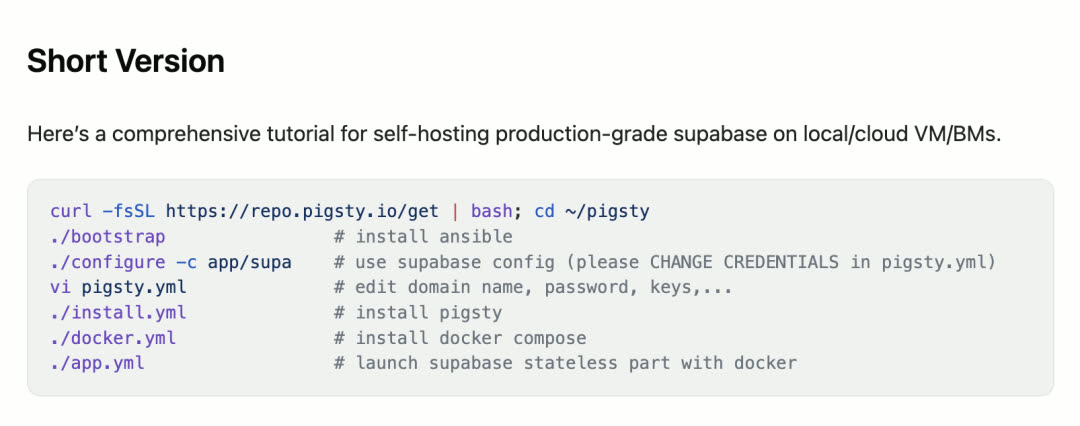
Additionally, Pigsty now defaults to using Docker Registry mirror sites provided by 1Panel, significantly improving download speeds in mainland China.
Currently, Pigsty and StackGres are the only two open-source vendors providing Supabase self-hosting solutions: Pigsty delivers on bare Linux systems, StackGres delivers on Kubernetes.
PITR Recovery Enhancement
In previous versions, Pigsty provided the pg-pitr script for “semi-automatic” PITR recovery assistance. This version adds a fully automated pgsql-pitr playbook for one-click point-in-time recovery.
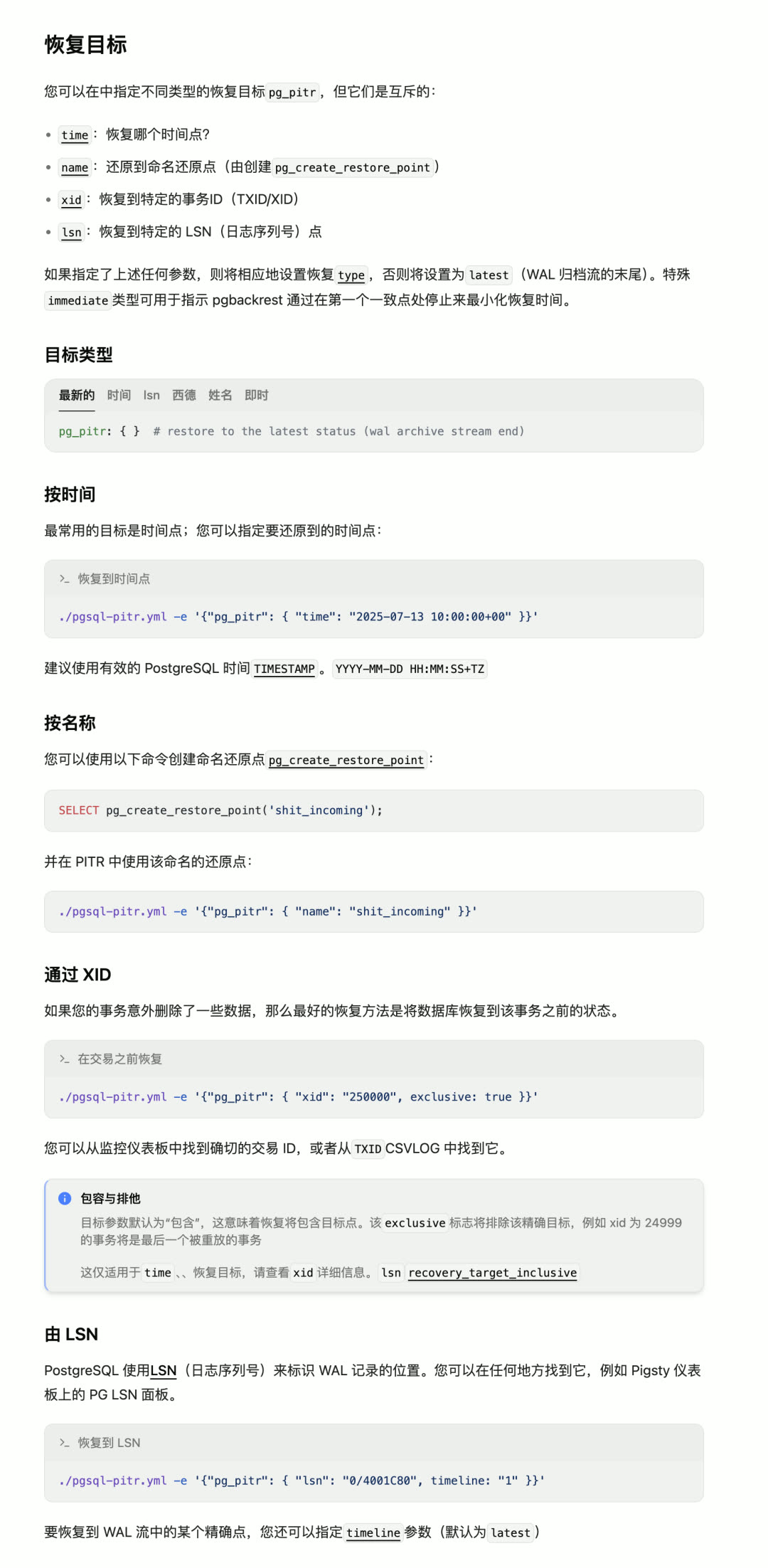
This playbook automatically performs the following operations:
- Pause high availability failover
- Shut down PostgreSQL
- Generate and execute pgbackrest PITR recovery command to specified target point
- Verify and restart PostgreSQL
- Re-enable high availability failover
Supports fast retry (in-place incremental) for precise recovery point targeting. Also adds a new use case: performing PITR recovery on newly started instances (or detached replicas) to avoid affecting existing business, then extracting data from the new instance for manual import.
ETCD Management Simplified
This version refactors the Etcd module, adding independent etcd-rm.yml playbook and scaling SOP scripts.
Previously, scaling etcd involved a series of complex command operations — now just a few simple commands:
The etcd.yml playbook no longer cleans existing ETCD clusters — cleanup is now handled by dedicated roles and playbooks, making maintenance simpler and clearer.
MinIO Module Improvements
The MinIO module has been refactored with a new Plain HTTP mode and adjusted default bucket and user configuration.
Previous versions enabled HTTPS for MinIO by default (via locally CA-signed self-signed certificates), avoiding intranet traffic snooping but causing some hassles: clients outside the Pigsty management node (like containers) need to trust that CA to access MinIO.
This version adds a switch allowing MinIO to run in pure HTTP mode. Note: pgbackrest doesn’t accept HTTP-mode MinIO, so local MinIO storage for PG backups still requires HTTPS mode. HTTP mode is only suitable for pure external service scenarios.
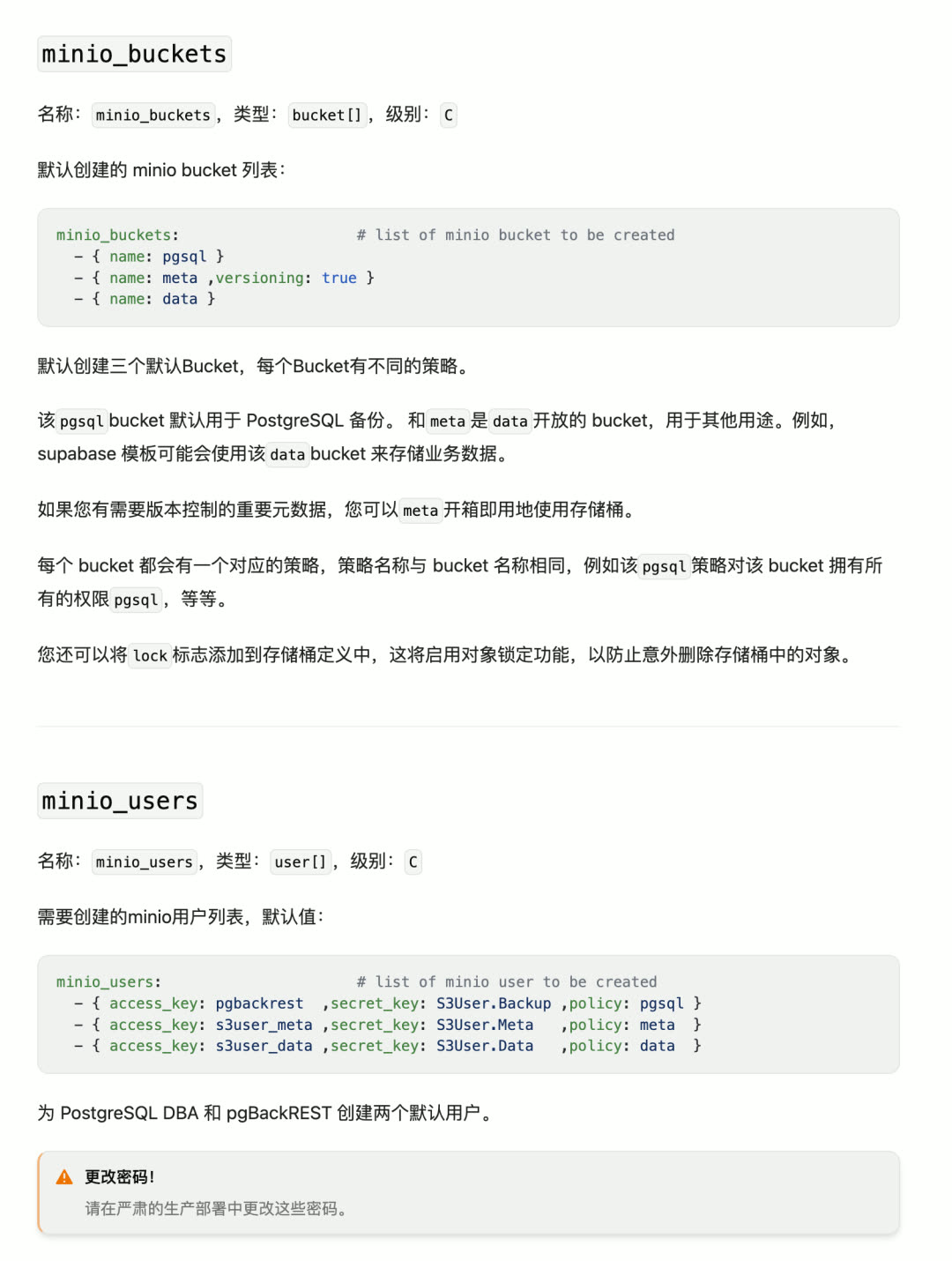
Default bucket configuration has also been adjusted:
| Original Config | New Config |
|---|---|
| pgsql, infra, redis | pgsql, meta, data |
Dedicated users s3user_meta and s3user_data have been created for meta and data buckets, with same-named policies for each bucket. With this design, applications like Supabase and Dify can directly use these two buckets without manual creation.
Installation Process Simplified
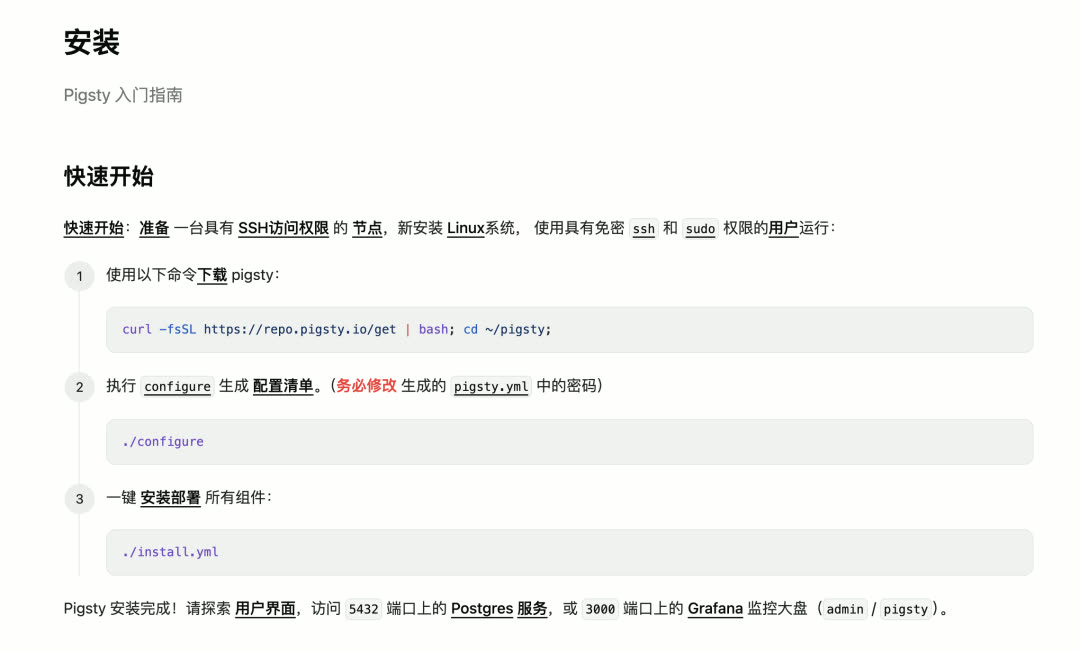
Installation steps reduced from four to three:
| Original Flow | New Flow |
|---|---|
| Download → Bootstrap → Configure → Install | Download → Configure → Install |
The “bootstrap” step (extracting offline packages or configuring upstream repos to install Ansible) has been merged into the download script — running the install script automatically executes ./bootstrap.
Online Installation by Default
The default installation strategy has changed: instead of downloading locally first then installing, it now installs directly from upstream internet sources.
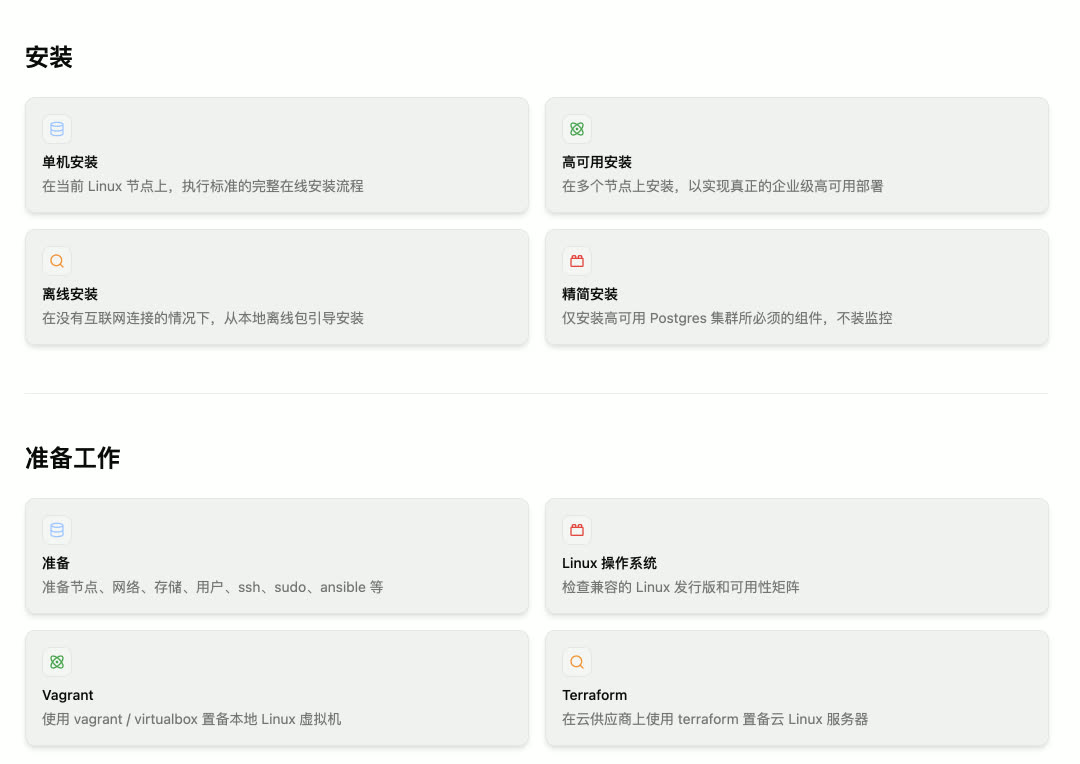
This change brings significant benefits:
- Fewer failure points: Many user-reported installation errors occurred during local repo download and Nginx service startup phases (like el9.aarch64 patroni-etcd installation failure due to PGDG configuration errors)
- Faster speed: Only downloads packages that actually need to be installed, rather than downloading everything at once
- Simpler configuration: No need to handle Nginx security policies and firewall configuration issues
A large proportion of users install Pigsty on single-node Linux and “don’t need” the multi-node consistency provided by local software repositories. Users who need local repos can re-enable via simple configuration (repo_enabled, node_repo_modules) or directly use the rich / full templates that enable local repos by default.
New Documentation Site
The new documentation site is now live: https://pigsty.io/docs/
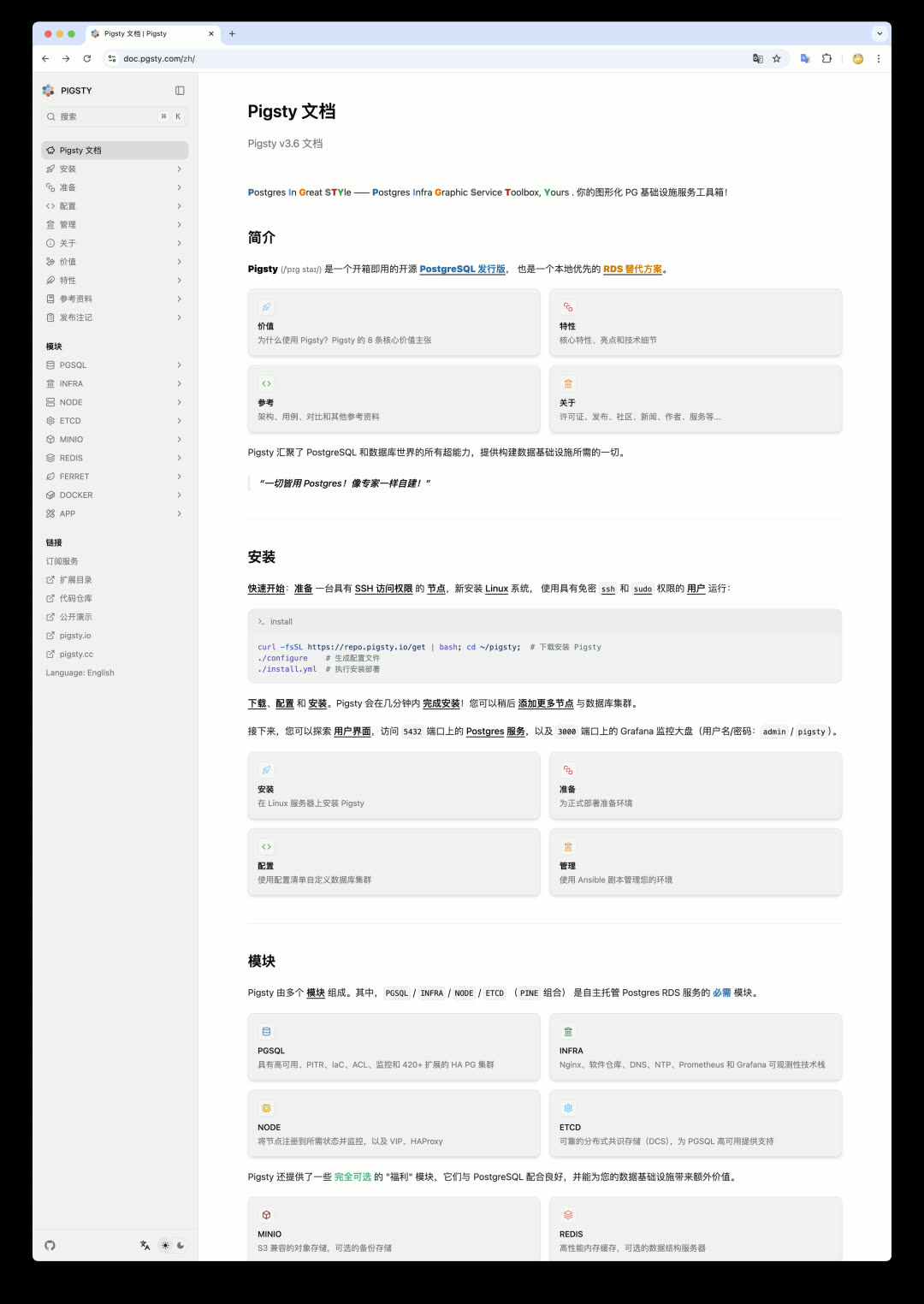
This site is built with Next.js and Fumadocs modern frontend stack — thanks to Lantian You and Claude Code for the strong assist. The English version is mostly complete; Chinese version is under translation. Contributions via GitHub PR or Issues are welcome.
Other Improvements
- tuned module optimization: Optimized for modern hardware and NVMe disks, removed outdated configuration parameters, added NVMe/virtualized SSD scheduling/readahead parameter optimizations
- MCP Toolbox integration: Integrated Google’s newly released MCP Toolbox (database MCP toolbox), with preset template SQL solving some database security issues
- Configuration template adjustments: All configuration templates adjusted to single-node mode for quicker onboarding
Next Steps: v4.0 and DBA Agent
PostgreSQL 18 will be released in September — Pigsty plans to officially release v4.0 after PG 18’s release. Main improvement directions:
| Area | Plan |
|---|---|
| CLI Tool | pig fully wraps Ansible playbook functionality, interface preliminarily finalized |
| Monitoring System | VictoriaMetrics / VictoriaLogs replace Prometheus / Loki |
| Log Collection | vector replaces outdated promtail |
| Portal Component | Considering Caddy to replace Nginx (TBD) |
The main theme of v4.x will be DBA Agent. Pigsty already has the complete context needed for a DBA Agent — the core being this industry-leading PG monitoring system. Once the domain knowledge accumulated in documentation is rich enough, wrapping MCP around the Pig CLI tool will birth a capable fully self-driving database DBA Agent.
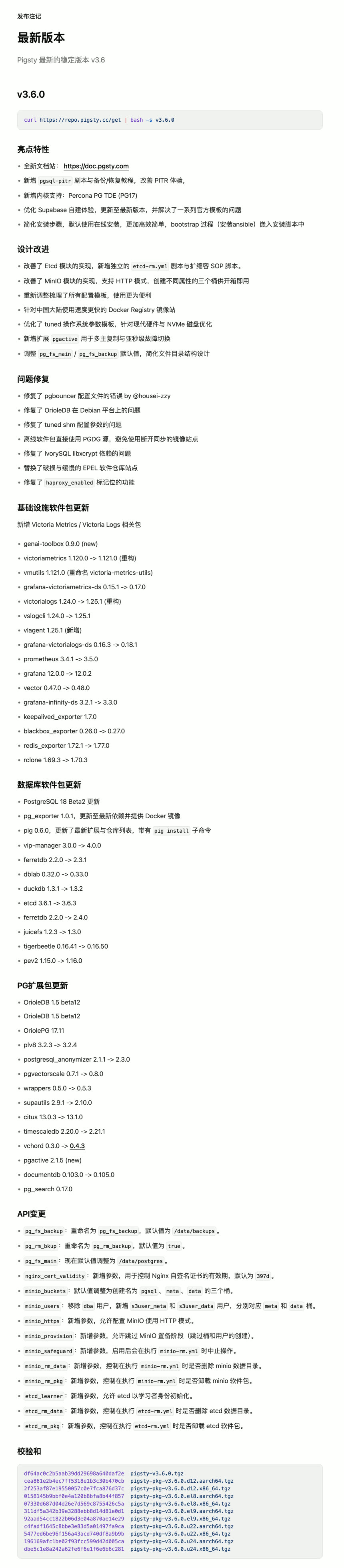
v3.6.0
Pigsty v3.6.0 released with new documentation site and PITR enhancement!
Highlights
- New documentation site: https://pigsty.io/docs/
- Added
pgsql-pitrplaybook and backup/recovery tutorials, improved PITR experience - New kernel support: Percona PG TDE (PG17)
- Optimized Supabase self-hosting experience, updated to latest version, resolved series of official template issues
- Simplified installation steps, defaults to online installation, more efficient and simple, bootstrap process (installing ansible) embedded in install script
Design Improvements
- Improved Etcd module implementation, added independent
etcd-rm.ymlplaybook and scaling SOP scripts - Improved MinIO module implementation, supports HTTP mode, creates three buckets with different properties out-of-the-box
- Re-adjusted and organized all configuration templates for easier use
- Uses faster Docker Registry mirror sites for mainland China
- Optimized tuned OS parameter templates for modern hardware and NVMe disks
- Added
pgactiveextension for multi-master replication and sub-second failover - Adjusted
pg_fs_main/pg_fs_backupdefault values, simplified file directory structure design
Bug Fixes
- Fixed pgbouncer config file error by @housei-zzy
- Fixed OrioleDB issues on Debian platform
- Fixed tuned shm config parameter issues
- Offline packages directly use PGDG source, avoiding out-of-sync mirror sites
- Fixed IvorySQL libxcrypt dependency issues
- Replaced broken and slow EPEL repository sites
- Fixed
haproxy_enabledflag functionality
Infrastructure Package Updates
New Victoria Metrics / Victoria Logs related packages:
- genai-toolbox 0.9.0 (new)
- victoriametrics 1.120.0 -> 1.121.0 (refactored)
- vmutils 1.121.0 (renamed victoria-metrics-utils)
- grafana-victoriametrics-ds 0.15.1 -> 0.17.0
- victorialogs 1.24.0 -> 1.25.1 (refactored)
- vslogcli 1.24.0 -> 1.25.1
- vlagent 1.25.1 (new)
- grafana-victorialogs-ds 0.16.3 -> 0.18.1
- prometheus 3.4.1 -> 3.5.0
- grafana 12.0.0 -> 12.0.2
- vector 0.47.0 -> 0.48.0
- grafana-infinity-ds 3.2.1 -> 3.3.0
- keepalived_exporter 1.7.0
- blackbox_exporter 0.26.0 -> 0.27.0
- redis_exporter 1.72.1 -> 1.77.0
- rclone 1.69.3 -> 1.70.3
Database Package Updates
- PostgreSQL 18 Beta2 update
- pg_exporter 1.0.1, updated to latest dependencies with Docker image
- pig 0.6.0, updated latest extensions and repo list, with
pig installsubcommand - vip-manager 3.0.0 -> 4.0.0
- ferretdb 2.2.0 -> 2.3.1
- dblab 0.32.0 -> 0.33.0
- duckdb 1.3.1 -> 1.3.2
- etcd 3.6.1 -> 3.6.3
- ferretdb 2.2.0 -> 2.4.0
- juicefs 1.2.3 -> 1.3.0
- tigerbeetle 0.16.41 -> 0.16.50
- pev2 1.15.0 -> 1.16.0
PG Extension Package Updates
- OrioleDB 1.5 beta12
- OriolePG 17.11
- plv8 3.2.3 -> 3.2.4
- postgresql_anonymizer 2.1.1 -> 2.3.0
- pgvectorscale 0.7.1 -> 0.8.0
- wrappers 0.5.0 -> 0.5.3
- supautils 2.9.1 -> 2.10.0
- citus 13.0.3 -> 13.1.0
- timescaledb 2.20.0 -> 2.21.1
- vchord 0.3.0 -> 0.4.3
- pgactive 2.1.5 (new)
- documentdb 0.103.0 -> 0.105.0
- pg_search 0.17.0
API Changes
pg_fs_backup: Renamed topg_fs_backup, default value/data/backups.pg_rm_bkup: Renamed topg_rm_backup, default valuetrue.pg_fs_main: Default value now adjusted to/data/postgres.nginx_cert_validity: New parameter to control Nginx self-signed certificate validity period, default397d.minio_buckets: Default value adjusted to create three buckets namedpgsql,meta,data.minio_users: Removeddbauser, addeds3user_metaands3user_datausers corresponding tometaanddatabuckets.minio_https: New parameter allowing MinIO to use HTTP mode.minio_provision: New parameter allowing skipping MinIO provisioning phase (skip bucket and user creation).minio_safeguard: New parameter that aborts operation when executingminio-rm.ymlif enabled.minio_rm_data: New parameter controlling whether to delete minio data directory when executingminio-rm.yml.minio_rm_pkg: New parameter controlling whether to uninstall minio package when executingminio-rm.yml.etcd_learner: New parameter allowing etcd to initialize as learner.etcd_rm_data: New parameter controlling whether to delete etcd data directory when executingetcd-rm.yml.etcd_rm_pkg: New parameter controlling whether to uninstall etcd package when executingetcd-rm.yml.
Checksums
See GitHub Release for more details.
v3.6.1
Pigsty v3.6.1 released with PostgreSQL minor version updates!
Highlights
- PostgreSQL 17.6, 16.10, 15.14, 14.19, 13.22, and 18 Beta 3 support
- Using Pigsty-provided PGDG APT/YUM mirrors in mainland China to resolve update supply issues
- New website homepage: https://pigsty.io
- Added el10, debian 13 implementation stubs, and el10 Terraform images
Infrastructure Package Updates
- Grafana 12.1.0
- pg_exporter 1.0.2
- pig 0.6.1
- vector 0.49.0
- redis_exporter 1.75.0
- mongo_exporter 0.47.0
- victoriametrics 1.123.0
- victorialogs: 1.28.0
- grafana-victoriametrics-ds 0.18.3
- grafana-victorialogs-ds 0.19.3
- grafana-infinity-ds 3.4.1
- etcd 3.6.4
- ferretdb 2.5.0
- tigerbeetle 0.16.54
- genai-toolbox 0.12.0
Database Package Updates
- pg_search 0.17.3
API Changes
- Removed
br_filterkernel module fromnode_kernel_modulesdefault value. - Uses OS major version number when adding PGDG YUM source, no longer uses minor version number.
Checksums
See GitHub Release for more details.